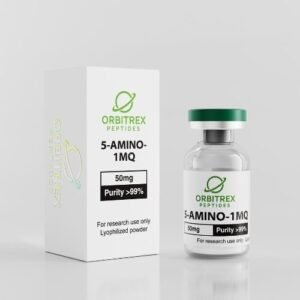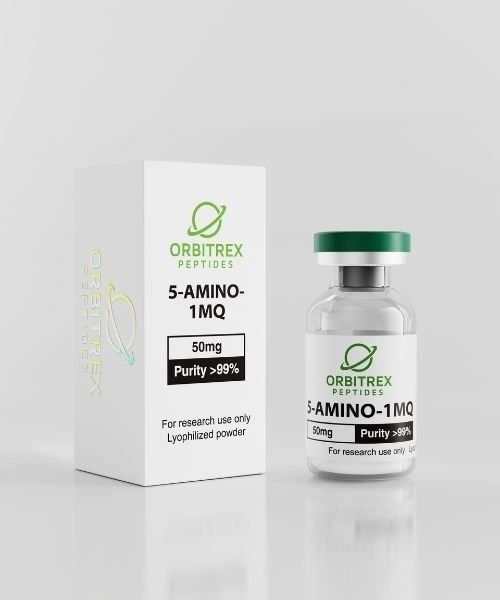
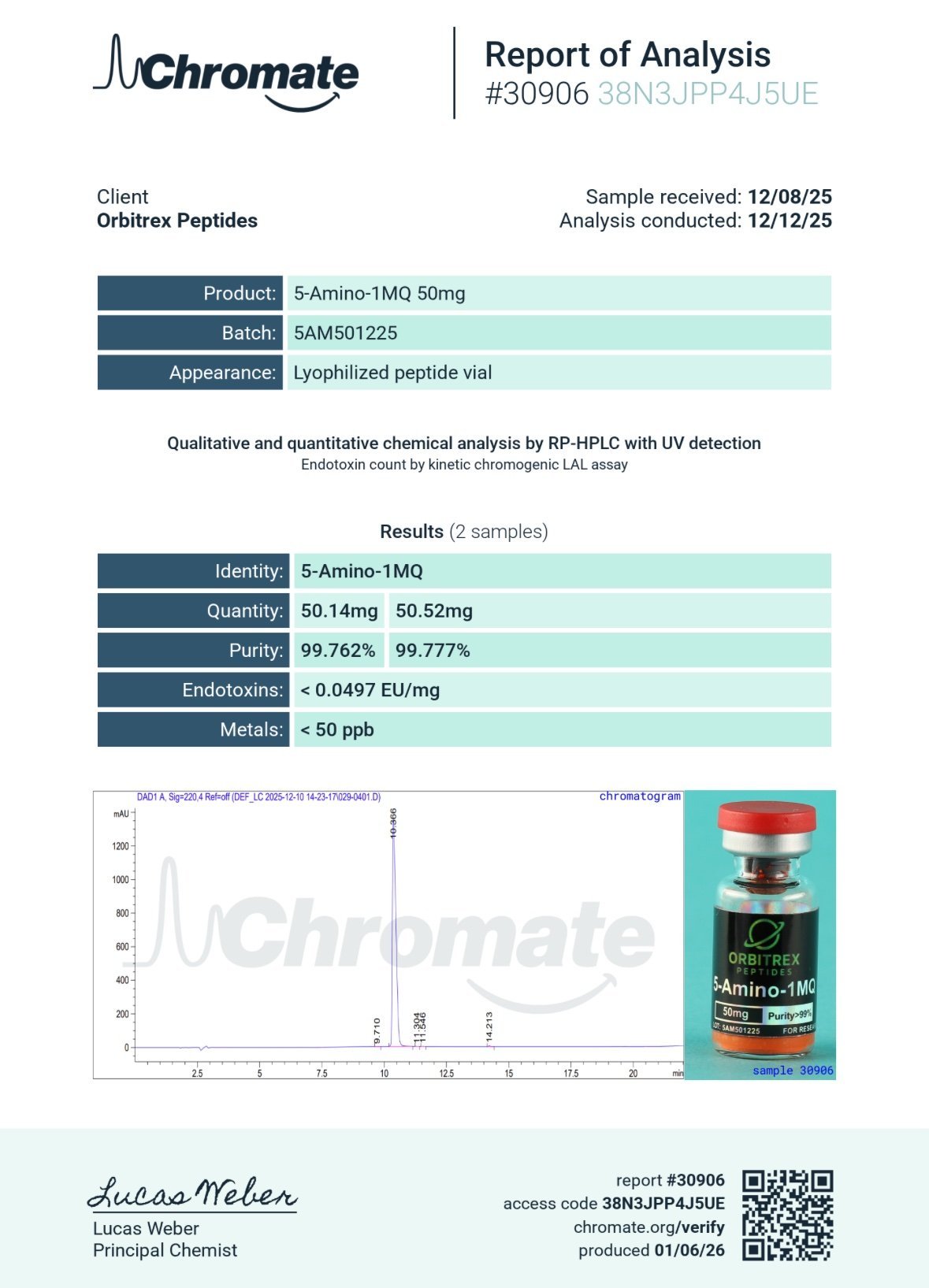
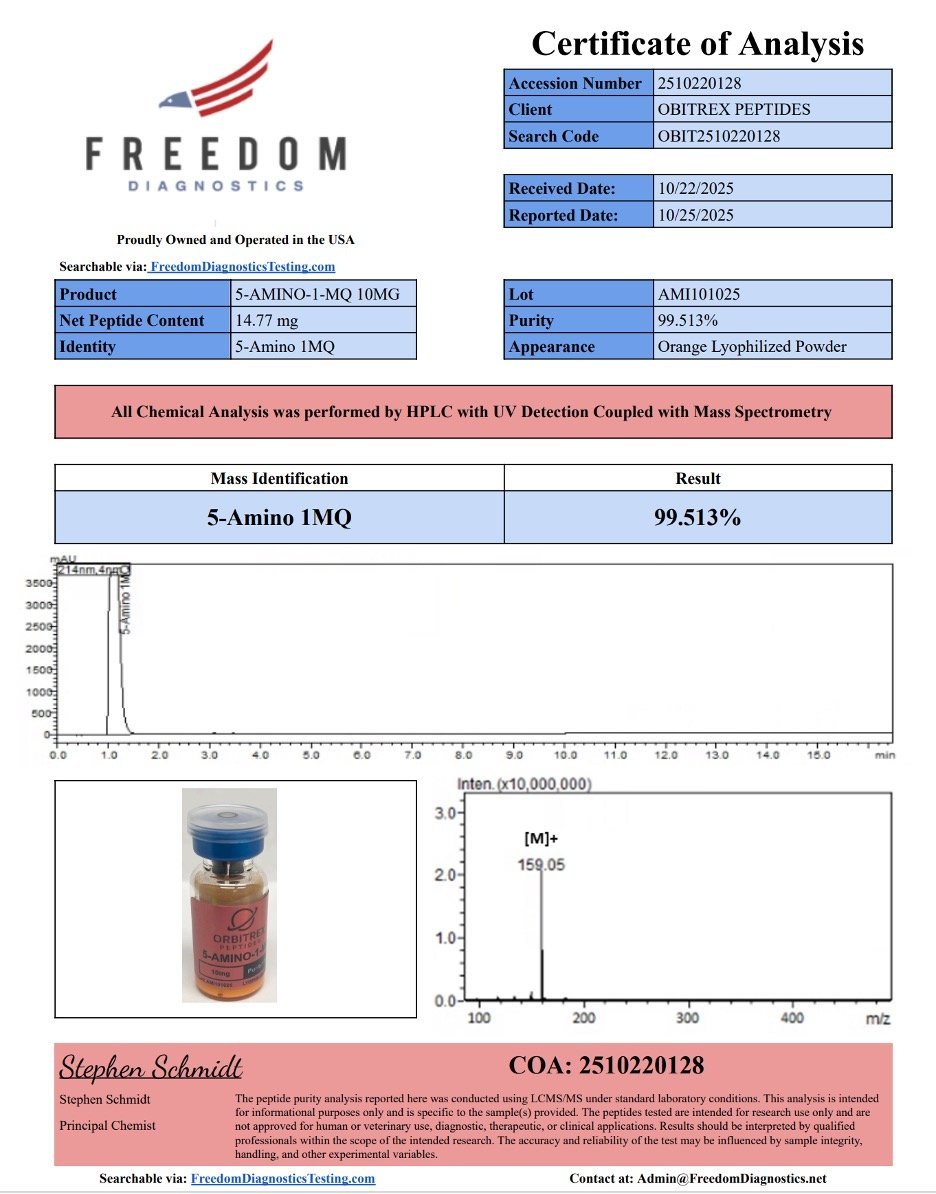
5-Amino-1MQ (Research Use) – High-Interest Compound for Metabolic Research in the USA
Introduction to 5-Amino-1MQ
5-Amino-1MQ is a small-molecule compound that has gained significant attention in metabolic and cellular energy research. In the United States, it is commonly discussed in scientific and preclinical research contexts due to its potential role in studying NAD+ metabolism, cellular energy balance, and lipid regulation pathways.
While interest around the search term “buy 5-amino-1MQ” has increased online, it is important to clarify that this compound is intended strictly for laboratory and research purposes only and is not approved for human consumption, medical use, or therapeutic application.
Researchers continue to explore its biochemical behavior in controlled environments to better understand metabolic regulation at the cellular level.
What is 5-Amino-1MQ?
5-Amino-1MQ is a synthetic research compound studied for its interaction with an enzyme known as NNMT (Nicotinamide N-methyltransferase). This enzyme plays a role in regulating:
- Nicotinamide metabolism
- Cellular energy production
- Fat metabolism pathways
- Methylation processes
By influencing NNMT activity in research models, scientists aim to better understand how metabolic efficiency and energy balance are regulated at a molecular level.
This makes 5-Amino-1MQ an interesting compound in experimental studies related to obesity, metabolic disorders, and cellular energy dynamics.
5-Amino-1MQ in Scientific Research
In the USA and other research-driven markets, 5-Amino-1MQ is studied in laboratory environments to explore its biochemical and metabolic effects. It is not a drug or supplement, but rather a research chemical used for experimental purposes only.
Key Areas of Research Interest:
1. NAD+ Metabolism Studies
Researchers investigate how NNMT inhibition may influence NAD+ levels, which are essential for energy production and cellular repair processes.
2. Fat Metabolism and Energy Balance
5-Amino-1MQ is studied for its potential role in lipid metabolism pathways, particularly how cells process and store energy.
3. Cellular Energy Research
Scientific interest focuses on how modulating NNMT activity may affect ATP production and overall cellular energy efficiency.
4. Metabolic Health Models
Preclinical studies use compounds like 5-Amino-1MQ to explore mechanisms related to metabolic rate, weight regulation, and insulin sensitivity pathways.
Why 5-Amino-1MQ is Trending in USA Research Circles
Search interest for “buy 5-amino-1MQ USA” has increased significantly due to growing curiosity in metabolic science and longevity research.
Key reasons for its popularity include:
- Increasing focus on NAD+ biology and aging research
- Interest in metabolic optimization pathways
- Expanding NNMT enzyme research publications
- Demand for novel cellular energy modulators in labs
- Rising discussions in biochemical and longevity research communities
Researchers are especially interested in how NNMT inhibition may influence metabolic efficiency at a cellular level.
Mechanism of Action (Research Context)
5-Amino 1MQ is primarily studied for its interaction with NNMT, an enzyme involved in the methylation of nicotinamide.
In laboratory models, NNMT activity is associated with:
- Energy expenditure regulation
- Fat storage signaling
- Metabolic rate control
By inhibiting this enzyme in research settings, scientists aim to observe changes in metabolic markers and cellular energy behavior.
This mechanism is still under investigation and has not been validated for clinical or therapeutic use.
Important Research Use Disclaimer
5-Amino 1MQ is strictly intended for scientific and laboratory research purposes only.
- Not for human consumption
- Not for medical or therapeutic use
- Not approved by the FDA or any health authority
- For qualified laboratory professionals only
- Must be handled in controlled research environments
All descriptions provided are for educational and informational purposes to support scientific understanding.
Handling and Storage Guidelines (Research Setting)
To maintain compound stability in laboratory environments, researchers typically follow standard peptide and small-molecule handling protocols:
- Store in a cool, dry environment
- Avoid exposure to heat and sunlight
- Use sterile laboratory equipment during handling
- Follow institutional research safety protocols
- Maintain proper labeling and containment
Proper storage ensures consistency and reliability during experimental use.
5-Amino-1MQ in Metabolic Science Research
Interest in metabolic science continues to grow across the USA, particularly in areas related to energy balance, obesity mechanisms, and cellular aging.
5-Amino 1MQ is being explored in relation to:
- Cellular NAD+ regulation pathways
- Mitochondrial energy efficiency
- Lipid metabolism signaling
- Enzyme-driven metabolic control systems
Although early in research stages, compounds affecting NNMT are considered promising tools for understanding complex metabolic interactions.
Final Thoughts
5-Amino 1MQ continues to attract attention in metabolic and cellular research due to its relationship with NNMT enzyme activity and NAD+ metabolism. While still in early-stage scientific exploration, it represents a growing area of interest in energy balance and metabolic regulation studies.
As research evolves, compounds like 5-Amino-1MQ may help scientists better understand the complex mechanisms behind cellular energy production and metabolic efficiency.
It remains strictly a research-use-only compound, intended for controlled laboratory environments and scientific investigation only.